
Blackjack - World Tournament
NEON GamesCard
4.53.53K Reviews
- Version
- 1.2.187
- Installs
- 1.00M
- Age Rating
- Teen
Screenshots
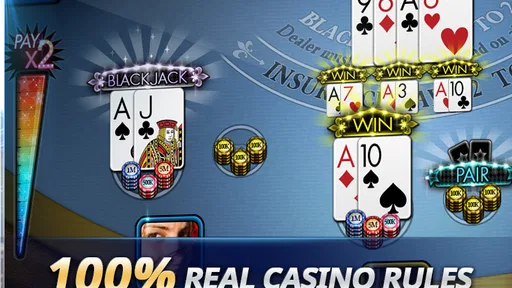
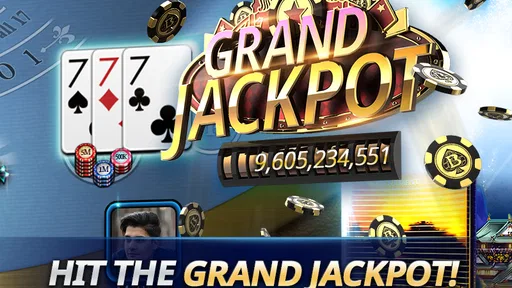
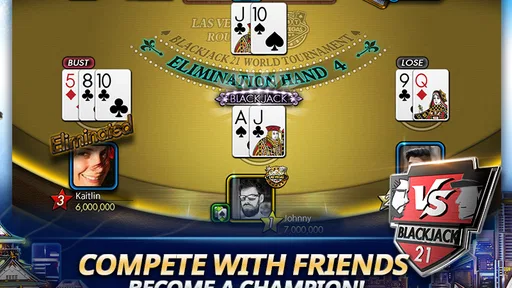

Our Review of Blackjack - World Tournament
 Analysis by Appyee
I approached Blackjack - World Tournament expecting a straightforward mobile version of a casino table, but its real appeal is the competitive framing. Developed by NEON Games, this free card game puts blackjack into a tournament-focused setting rather than treating every hand as a completely isolated round. That change gives familiar rules a stronger sense of purpose: each decision feels connected to a result, a position, and the pressure of trying to finish ahead.
My overall view is positive, with one important qualification. This is a good choice if you enjoy blackjack and want a more competitive rhythm than a quiet practice table provides. It is less suitable if you want a completely relaxed card game, dislike the possibility of in-app purchases, or are looking for a broad casino collection instead of a title centered on one game. The basic download is free, but the presence of optional purchases means I would play it as entertainment, not as a substitute for learning or managing real money.
Why the tournament format changes the experience
The central idea is simple but effective: blackjack is presented as a contest. In a conventional mobile blackjack app, I can make sensible decisions, watch the dealer reveal cards, and move immediately to the next hand. That format is useful for practice, yet it can become repetitive because every round has the same emotional weight. A tournament structure gives the session a clearer arc. I am not only asking whether my current hand is strong; I am also thinking about how aggressively I should play when the result matters in relation to other players.
That extra layer makes familiar choices feel more meaningful. A conservative decision can protect a good position, while a more ambitious move may be tempting when falling behind. Blackjack still depends heavily on the cards, so the game cannot turn chance into skill, but the tournament setting encourages me to think about timing and risk rather than simply repeating a basic routine.
This is also where the game’s identity becomes clearer than its short store description suggests. It is not trying to reinvent blackjack’s card values. Instead, it uses competition to make a well-known game more engaging on a phone. I found that approach easier to return to than a barebones table because the session has a reason to continue beyond the current hand.
The game has been available since May 16, 2016, and its continued presence is reflected in its audience: it has passed one million installs, with an average rating of 4.5 from roughly twenty-five thousand ratings. Those figures do not guarantee that every player will enjoy the format, but they do indicate that the concept has found a substantial audience. The number of written reviews, around three and a half thousand, also suggests that players have spent enough time with it to form opinions beyond a quick first impression.
What I pay attention to during a session
When I play a tournament-style blackjack game, I try not to treat every hand as a command to chase a dramatic result. The more useful mindset is to separate three questions: what does the current hand justify, how much risk is appropriate for the situation, and am I making a decision because it is sound or because I am trying to recover from the previous hand? That last question matters especially on mobile, where quick rounds can encourage emotional choices.
A practical approach is to decide on a personal stopping point before starting. If I am playing during a short break, I prefer a limited session rather than allowing one unlucky sequence to turn into a long attempt to catch up. Tournament pressure can be entertaining, but it can also make a player keep going after the fun has disappeared. Setting a time boundary is a small habit that keeps the competitive element in its proper place.
Another useful habit is to treat the result of a single hand as information, not as a verdict on my ability. Blackjack includes uncertainty by design. A good decision can still lose, and a poor decision can still win. The tournament setting makes that distinction important because a lucky outcome can encourage overconfidence just as quickly as a bad outcome can encourage reckless recovery attempts.
How it compares with ordinary blackjack apps
Compared with a traditional single-table blackjack app, this game is more appealing to me when I want momentum. A standard alternative may be better for quietly reviewing basic decisions, testing a familiar strategy, or playing without the feeling that every hand contributes to a wider contest. The tournament approach is better when I want a reason to stay engaged from one round to the next.
The trade-off is focus. A single-table app can feel cleaner because it removes the competitive context and lets the player concentrate only on the cards. Here, the tournament idea is the reason to install it, but it is also the feature that may make the game feel more demanding. If I am tired or only want a calm few minutes, the extra pressure is not always welcome.
It also differs from broader casino-style apps that combine blackjack with several other table games. Those alternatives may offer more variety, while this title is more specialized. I would choose NEON Games’ game when blackjack itself is the main attraction and I want a competitive presentation. I would choose a multi-game app when I expect to switch frequently between different card or casino formats.
For someone learning blackjack from the beginning, a dedicated educational tool may be a better first step. Tournament play can make decisions memorable, but it does not automatically explain why one choice is preferable to another. I would first learn the fundamentals elsewhere or through careful self-study, then use this game to apply them under more exciting conditions.
Where the game is strongest
The strongest part of the experience is the way it turns a familiar card game into a goal-driven activity. I do not need a complicated ruleset to understand what I am trying to do. That accessibility matters on a phone, where a game should be easy to enter without a long tutorial or a large amount of setup.
Its free price also lowers the barrier to trying it. I can see whether the tournament format suits me before committing financially. At the same time, the game includes in-app purchases ranging from $0.99 to $204.99 per item. That range is significant enough that I would advise new players to pay attention to their spending habits from the beginning. A free download is not the same thing as a completely cost-free experience.
I appreciate that the game works on devices using Android 6.0 or later, which gives it a relatively broad compatibility range for players who are not using the newest phone. The current version is 1.2.187. For a game that has been around for years, that combination makes it more approachable for people using an older compatible device, although the actual feel will still depend on the phone and operating system.
The Teen content rating is another detail worth considering before installing it for a younger player. I would not present it as a children’s card game. A teenager may find the competitive casino-style setting suitable depending on family expectations, but adults should still discuss the difference between virtual play and real-world gambling. The game should be framed as a digital entertainment experience, not as preparation for betting with actual money.
Three ways I would get more from it
First, I would use short, deliberate sessions instead of playing automatically until I become frustrated. The tournament format is most enjoyable when I am alert enough to think about risk. A ten-minute break after a disappointing result can prevent the common mistake of changing a reasonable strategy simply because the last hand went badly.
Second, I would keep a simple mental distinction between strategic decisions and tournament decisions. The correct blackjack action depends on the cards and the situation at the table, while the tournament context may tempt me to take a different level of risk. Thinking about those as separate layers helps me understand whether I am choosing a move because of blackjack knowledge or because of the scoreboard pressure.
Third, I would avoid treating purchases as a way to repair a poor session. Since individual hands remain uncertain, spending more after a loss does not make the next decision wiser. I would explore the free experience first, set a personal budget if I decide to buy anything, and stop when that limit is reached. This is especially important because the highest listed purchase tier is much larger than the smallest one.
A fourth tip is to use the game as a social or conversational activity rather than a solitary test of luck. I can imagine comparing decisions with a friend after a session: not just who finished better, but whether a risky choice was justified by the situation. That makes the game more interesting and turns the tournament structure into something to discuss instead of merely a reason to chase another round.
The meaningful weakness: pressure can become the whole experience
The same competitive structure that gives the game its personality can also limit its audience. If I want a slow, low-pressure blackjack table, the tournament framing may feel like unnecessary noise. The game’s appeal depends on caring about performance across a contest. Without that interest, the basic card actions can start to feel repetitive because the surrounding motivation no longer works.
There is also a psychological trade-off in any game that combines chance with competition. A player may understand that the cards are unpredictable and still feel compelled to keep playing after a bad outcome. That is not a flaw unique to this title, but it is a real limitation of the format. The tournament goal can make a short session more exciting, yet it can also make it harder to put the phone down at the right moment.
The purchase range adds another point of friction. Free access is helpful, but optional spending can change how comfortable the game feels for different players. I would be cautious about recommending it to someone who prefers games with no purchase prompts or who finds virtual currency systems distracting. For that audience, a paid blackjack app with a clearly defined cost, or a simple offline card game, may be a better fit even if it offers less competitive excitement.
I would also avoid judging the game as a complete blackjack education. Its value is in practicing attention, patience, and decision-making within a tournament-style environment. It is not the same as a structured lesson that explains probabilities, bankroll management, or the mathematics behind every move. A beginner who wants instruction should pair it with a reliable learning resource rather than assuming that repeated play alone will create strong technique.
Who should play it, and who should skip it
I think the best audience is an adult or teenager who already understands the basic appeal of blackjack and wants a more competitive mobile format. It suits players who like short sessions with a clear objective, enjoy comparing outcomes, and do not mind that luck remains a major part of the result. The game is particularly easy to recommend to someone who has tried ordinary blackjack apps and found them too flat or repetitive.
It can also work well in an everyday situation such as a commute, a waiting room, or a quiet break at home. I would start a session when I have enough time to finish a meaningful stretch rather than opening it during a moment when I must immediately put the phone away. The tournament idea gives a short break more shape, but it is not ideal when interruptions are guaranteed and I cannot concentrate on the decisions.
I would skip it if my main goal is to play several different casino games in one app. Its identity is concentrated around blackjack, and that focus is a strength only when blackjack is what I actually want. I would also choose something else if I need a fully instructional experience, a completely purchase-free environment, or a very quiet game with no competitive pressure.
Families should consider the Teen rating and the gambling-style presentation before allowing younger users to play. Even when no real-world betting is involved, the subject matter can encourage conversations about chance, spending, and responsible play. I would make those boundaries clear rather than presenting the game as harmless simply because it is digital.
For experienced blackjack players, the main question is not whether the rules are familiar. It is whether the tournament context adds enough tension to justify choosing this over a more minimal table. In my case, it does when I want a goal and a sense of progression within a session. When I want to focus purely on decision quality, I prefer a simpler alternative.
My final recommendation
Blackjack - World Tournament succeeds because it gives a recognizable card game a clear competitive identity. NEON Games has chosen a focused concept rather than filling the app with unrelated modes, and that makes the experience easy to understand. The free entry point, broad Android compatibility from version 6.0 onward, and established audience make it a reasonable title to try if tournament blackjack sounds appealing.
My recommendation comes with sensible limits. I would not install it expecting a complete blackjack course, a broad casino collection, or a purely risk-free atmosphere. I would play with a time limit, keep purchases optional, and remember that tournament results combine decisions with chance. Those habits preserve the fun while reducing the temptation to chase a result.
In the end, this is a specialized recommendation rather than a universal one. If you want blackjack with more tension and a stronger reason to play one hand after another, it is worth trying. If you want calm practice, detailed teaching, multiple casino games, or no spending pressure at all, another app will probably serve you better. For the right player, though, the tournament format gives this card game enough personality to stand apart from an ordinary digital table.
Verdict
Strengths of Blackjack - World Tournament
- Fast-paced rounds make it easy to play during short breaks.
- Tournament format adds excitement beyond standard blackjack games.
- Simple controls are suitable for both beginners and experienced players.
- Global rankings provide a clear goal for competitive players.
- The game offers a convenient way to practice blackjack decision-making.
Limitations of Blackjack - World Tournament
- Results can depend heavily on luck, especially in short tournaments.
- Competitive play may encourage frequent replays to improve rankings.
- Some features or rewards may require in-app purchases.
- Online events may be less enjoyable with a weak internet connection.
- The tournament focus may not appeal to players seeking relaxed solo games.
Similar Picks in This Category
View All
Solitaire - Classic Card Games
MobilityWare4.6

UNO!™
Mattel163 Limited4.3

Spider Solitaire: Card Games
MobilityWare4.6

Solitaire.com - Classic Cards
Tripledot Studios Limited4.7

Plants vs. Zombies™ Heroes
ELECTRONIC ARTS4.1

Hearthstone
Blizzard Entertainment, Inc.4.1
Frequently Asked Questions
What is Blackjack - World Tournament?
Blackjack - World Tournament is a mobile casino-style card game focused on competitive blackjack matches. Players aim to beat the dealer by getting as close to 21 as possible without going over, while also competing through tournament-style events, rankings, or score-based challenges. It is designed for entertainment and uses virtual gameplay rather than providing a way to win real casino money.
Can I play Blackjack - World Tournament offline?
The game may allow some blackjack practice or single-player features without a constant connection, but tournament participation, leaderboards, account synchronization, advertisements, and other online services generally require internet access. Availability can vary by device and version, so players should not assume every mode works offline. An internet connection is recommended for the complete experience.
Does Blackjack - World Tournament use real money or offer real prizes?
Blackjack - World Tournament is intended to be played with virtual currency, points, or in-game rewards rather than real-money betting. Any chips earned or purchased inside the app should be treated as part of the game and normally cannot be exchanged for cash. Before downloading, users should review the store description and payment settings, especially if children may access the device.
Is Blackjack - World Tournament suitable for beginners?
Yes, beginners can generally learn the basic rules through regular matches and gradually become familiar with actions such as hitting, standing, doubling down, or splitting pairs. However, tournament modes can feel more competitive because scores, rankings, limited resources, or timed events may influence decisions. New players should start cautiously, read the instructions, and practice before focusing on leaderboard results.
Are there in-app purchases or advertisements in Blackjack - World Tournament?
The game may include advertising, optional purchases, or virtual currency systems that support continued play and special features. These elements can differ according to the platform, region, and current version of the app. Players should check the official Google Play or App Store listing for the latest pricing and purchase information, and enable device-level purchase restrictions if needed.
Play our best games!


